Directions: To start this hike, head North-west out of Comox towards the inland highway via Piercy Road. Not too far out of town, staying on Piercy, you will see signs and parking for the Komoks Treaty Lands and Tribal Park. Park along the side of the road here, or across the road. Minding not to block the yellow gate. Walk around the gate, along the power lines. The trail starts here on this slightly overgrown, grassy, shrubby service road.

Trail: Head under the power lines, in 200m taking the first right into a usually slightly overgrown trail surrounded by shrubby plants, walk along this short section soon arriving into a healthy forest and wider trail which is fairly flat.
In the summer, although the terrain is very uneven, it is easy to traverse for any able individual. In the wet seasons of fall, winter and spring, the trail get’s very muddy, containing a great number of puddles, making it more difficult to traverse. Sometimes you may have to jump from root to root to keep from the suction of a muddy puddle. At this time, gumboots are heavily recommended for the trail. The upside to all that water is a powerful angle of Browns Falls, and a number of small, beautiful tributary falls along the river’s banks. In this first stretch, with heavy snowfall, the flat, uniform landscape makes it easy to get lost.
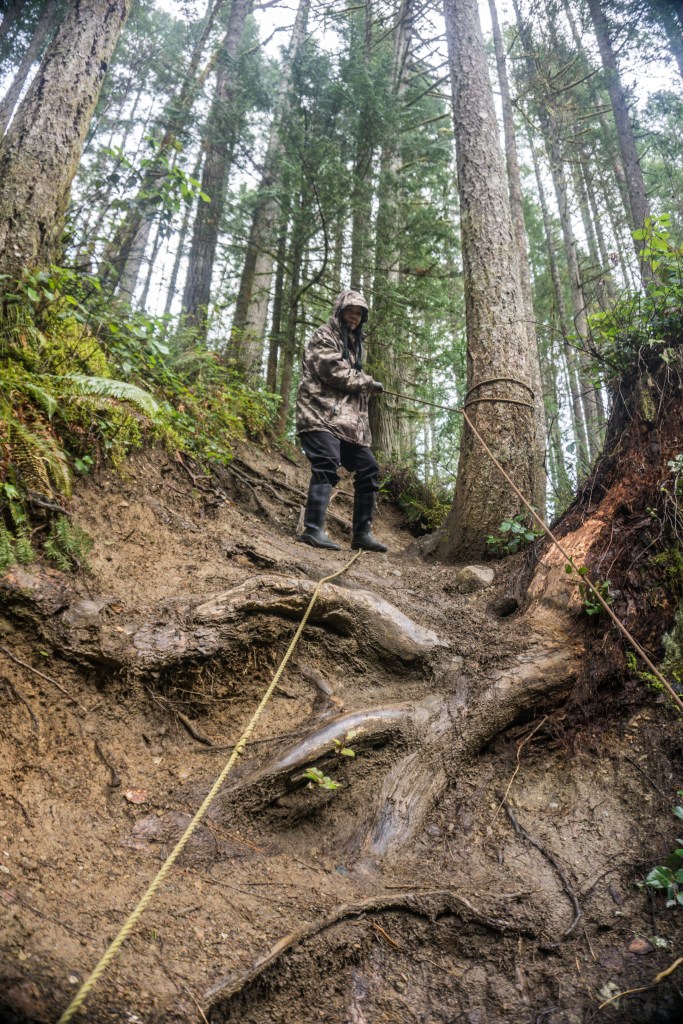
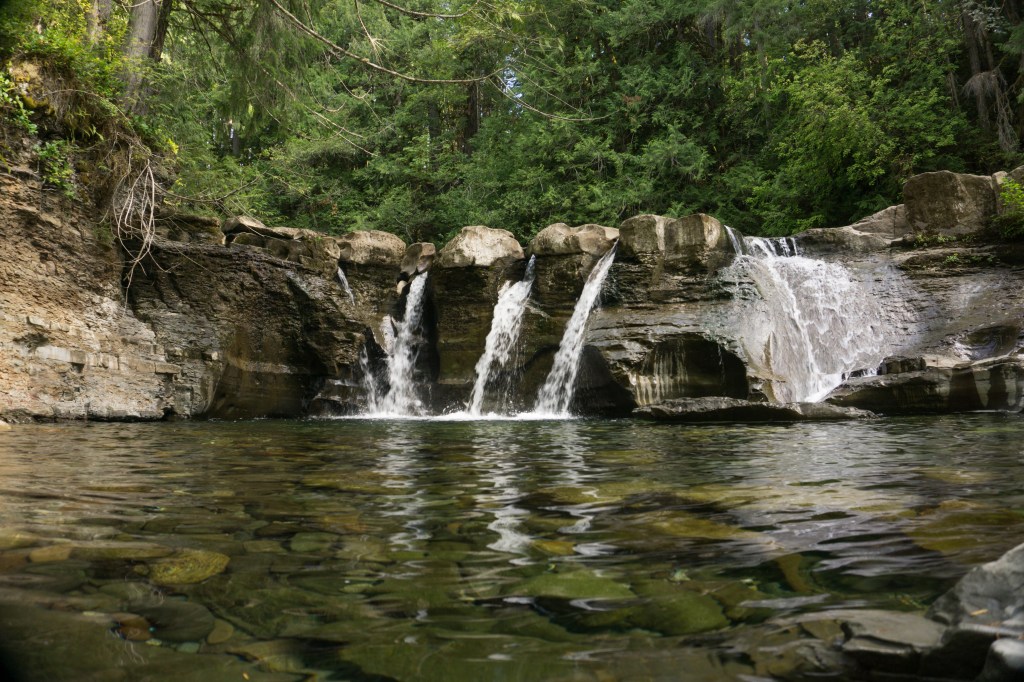
About 500m from your first turn into the forest you will come to a T go right. Follow along the steep river bank soon coming to a small hill. At the bottom of this hill, take another right down a steep trail with large roots and ropes set up to assist your descent. This is the most difficult feature of the trail. From here, you can either explore from the top of the falls or access a small rope assisted ledge to the front of the falls. In the wet months, the river can still be shallow enough to cross at the top accessing a trail on the other side and fantastic view of the falls. In the summer, the river is easily crossed from below and explored from within the river bed. The river bed is mainly made up of sandstone setting a place for some cool-looking potholes and formations.
Robert Brown: Browns River was named for Robert Brown, a prominent, successful scientist and explorer of the 19th century. Robert was a young British man who led the first European exploration of the Island in 1864 covering a near 2000 km. The expedition lasts four and a half months, ending in the fall of that year. From this expedition came many names across the island. According to “BC Geographical Names”, Browns’ fellow explorers insisted they should name the River after him. Considering the extensive fossil record found throughout Browns River, and Roberts’ interest in the prospects of coal, the name must have been a give in for his crew. The crew also discovered Gold in Leech Town, categorized flora, began Comox Valley’s coal rush, and recorded contact with the K’omox People, in a territory unreached by colonists. Robert ended his expedition in the Valley. If you want to learn more about Robert Brown and his expedition, check out “Vancouver Island Exploring Expedition” a journal written by Brown and published by the “UBC Press”.
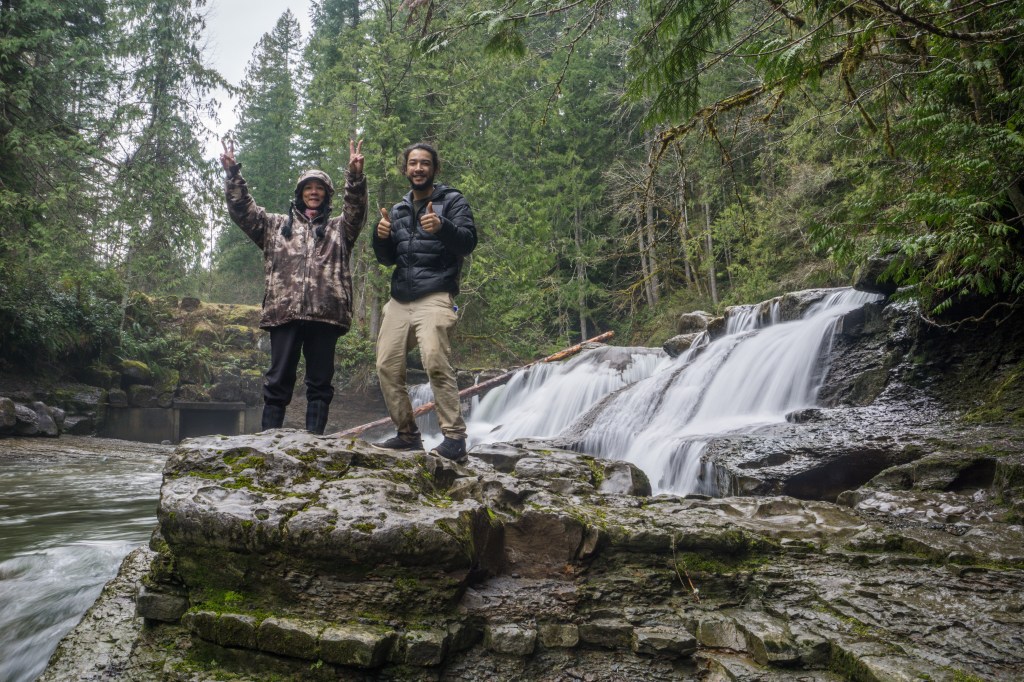
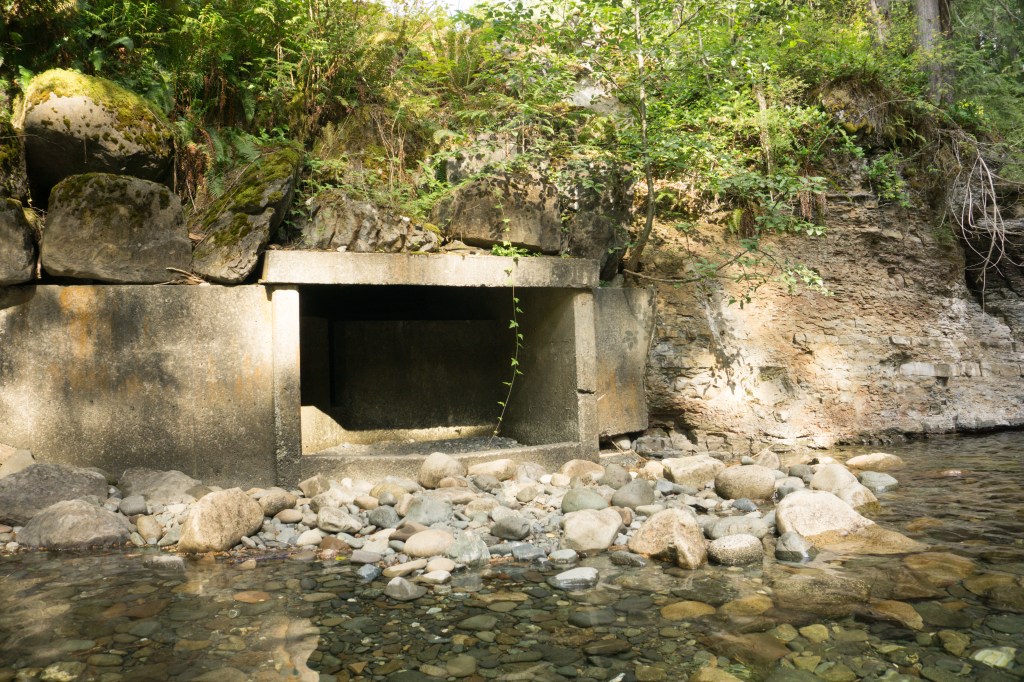
Fish By-Pass: The small concrete box beside the falls is a fish by-pass used to assist spawning fish on their journey home. Although the populations are dwindling, Brown’s River supports most of your regular species of river dwelling salmonoids, including Pink, Coho, Rainbow and Cutthroat. According to Comox residents, for years they knew it as a river with good runs of late spring Steel Head. Human activity, mainly the construction and use of hydro dams, spawning substrate loss and toxic by-products leeching from a copper mine on Mount Washington has had great impact on the fish within the Puntledge Watershed system. As of now, fishing in both Brown’s and Tsolum rivers has been banned by the DFO. Ongoing habitat restoration is taking place, and has been for quite some time, conservation groups having hopes of bringing back the river’s fish populations, the Steel Head being an especially hard population to revive.
 Vanislewaterfalls