Directions: Drive through Port Alberni as if you are headed to Bamfield. As you enter Port Alberni, there will be signs directing you there. Off of Anderton, turn down Franklin River Road. The road will eventually split, stay on Franklin River, eventually crossing a small bridge and coming to a forest service road, signs for “China Creek Marina”. Just before the second bridge is a gate, accompanied by a sign stating it is access to a gravel pit. On the other side of the road is an deactivated road with just enough space to park safely. I parked here. Please be careful on these roads. Although Mosaic allows public access to reach Bamfield and the Marina, logging operations are constant in this area, having a properly programmed radio is a must.
Trail: Access to the trailhead is fairly difficult to find. It starts up the inner embankment of an unassuming ditch. A deteriorated, hard-to-see wooden sign engraved “trail” marks the spot not far to the right of the yellow gate. It may be hidden by swooping branches as it was when I arrived.
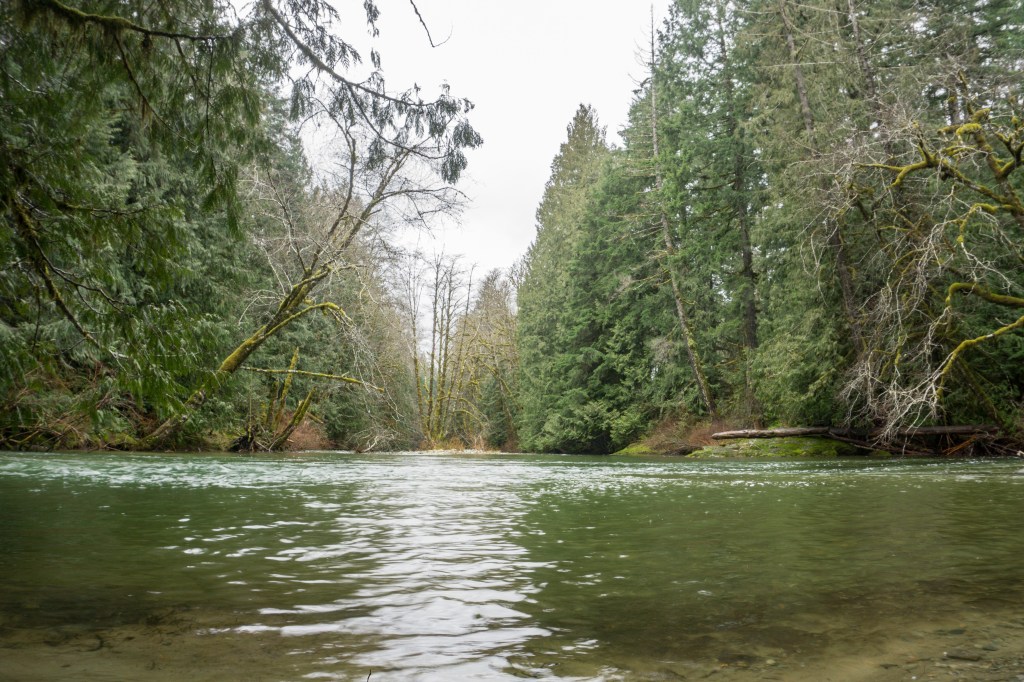
Make your way over the embankment and up stream. Soon the trail will split into a trail two, one that back tracks or one that continues up stream, continue upstream. The prior trail leads to a large, deep and mostly calm pool, the perfect combination for swimming. The trail is thin and follows alongside the creek for its entirety. It can be muddy, with roots and large sharp rocks jutting out of the forest floor. Although at some points it can disappear into low-lying bush, it is easy to follow.
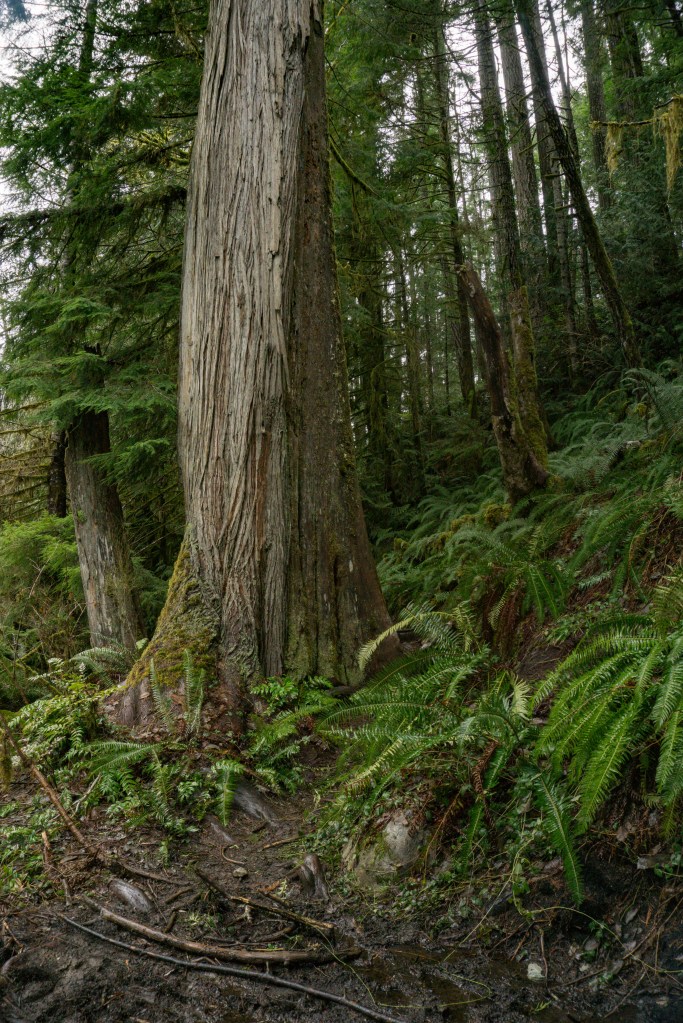
Soon the trail will cross a small stream. In the wet-season a make shift bridge is used to cross. At the time I went it was a 6×6 post, you could see the remnants of a log bridge. The trail splits around the tree and to the side, away from the creek, is a flatter place to cross in the dry season. Past here is a recent clear cut following alongside the edge of the trail. Here you can feel the encroachment of “industrial progress” on nature. Along this section are a few mud bogs and two large old-growth cedars, giving a look into what this forest looked liked in the past before human advancement. Past this point is where most of the elevation is gained for the trek.
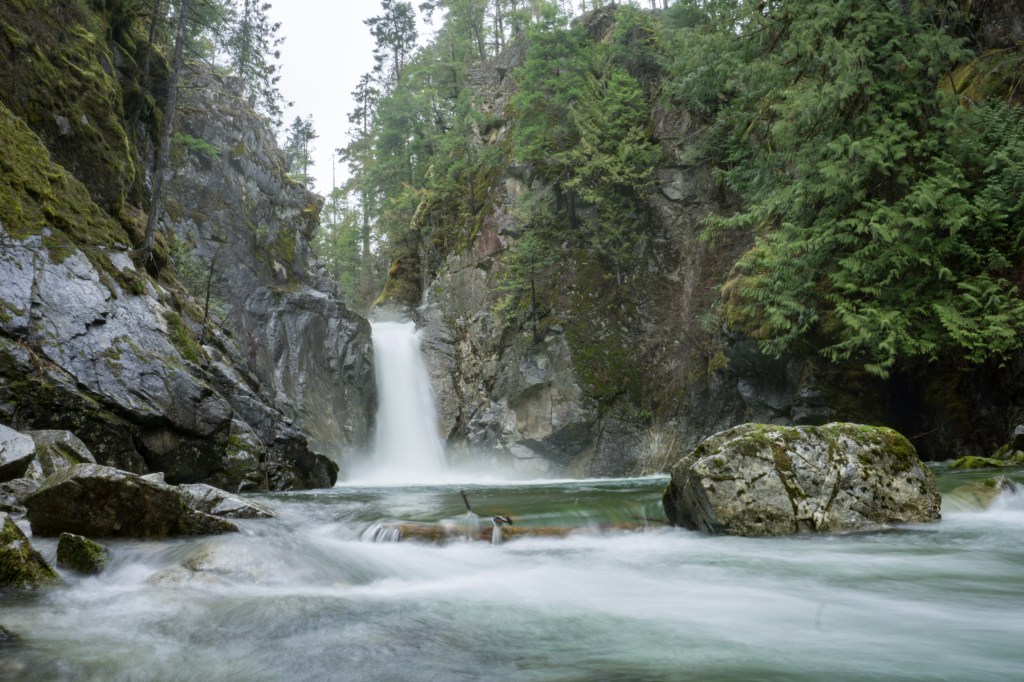
Once the elevation starts to increase rapidly, climbing up a small rocky cliff side, and eventually leveling out you will reach a rope and the sounds of a roaring waterfall. Scramble down the hill using the rope as assistance and you are there to witness the glory of Chie Creek Falls. Continuing up the trail atop the scramble will bring you to a view above the falls.

Chinese Prospectors: Placer Mining is the mining of a streambed. Vancouver Island is a place well known for its sizable quantity of “flour gold” or small flakes of gold worn off a larger vein and deposited into streams. China Creek gets its name from the substantial population of Chinese prospectors who scoured this area for just this type of gold. These placer-miners carried out their activity’s in a variety of ways, mainly by the manual use of pans, rocker boxes, and sluice boxes which work by utilizing the density of gold, letting the heavier gold sift to the bottom away from the lighter matrix. These Chinese miners would have hiked in from the surrounding Alberni communities, setting up their own camps to chase dreams of winning the gold rush. Soon though, this would all be disrupted once a few big wigs realized the massive earning potential of this water source.
During the 1890s, mining became industrialized and workers became hired. The large companies backed by shareholder power moved in quickly, and they built a small village around China Creek in order to make mining more efficient, staking their legal claims, and initiating the first full-scale projects exploiting resources in the area. Just as quick as they moved in though buying power began to run dry, and industrialized gold mining would not come back until the mid-20th century where it too would only last a few years. Still today, a rookie could pan gold out of China Creek, as long as they are cognizant of the claims in the area.
The Red Cedar: Along the trail are two prominent old-growth Red Cedars. According the Coast Salish story which has survived the millennia orally, before the people had Red Cedar there was a very kind and generous man, who loved and cared for the people. He brought the food and clothing, helping them survive. The creator respected this mans generosity and once he passed, a red cedar grew from his resting place. From then on the cedar provided the nation with the provisions they needed to prosper. The red cedar can grow for over 1000 years witnessing more than man every could. Now man is it’s greatest threat, as can be seen by the modern old-growth logging protested by many across the world.
 Vanislewaterfalls